
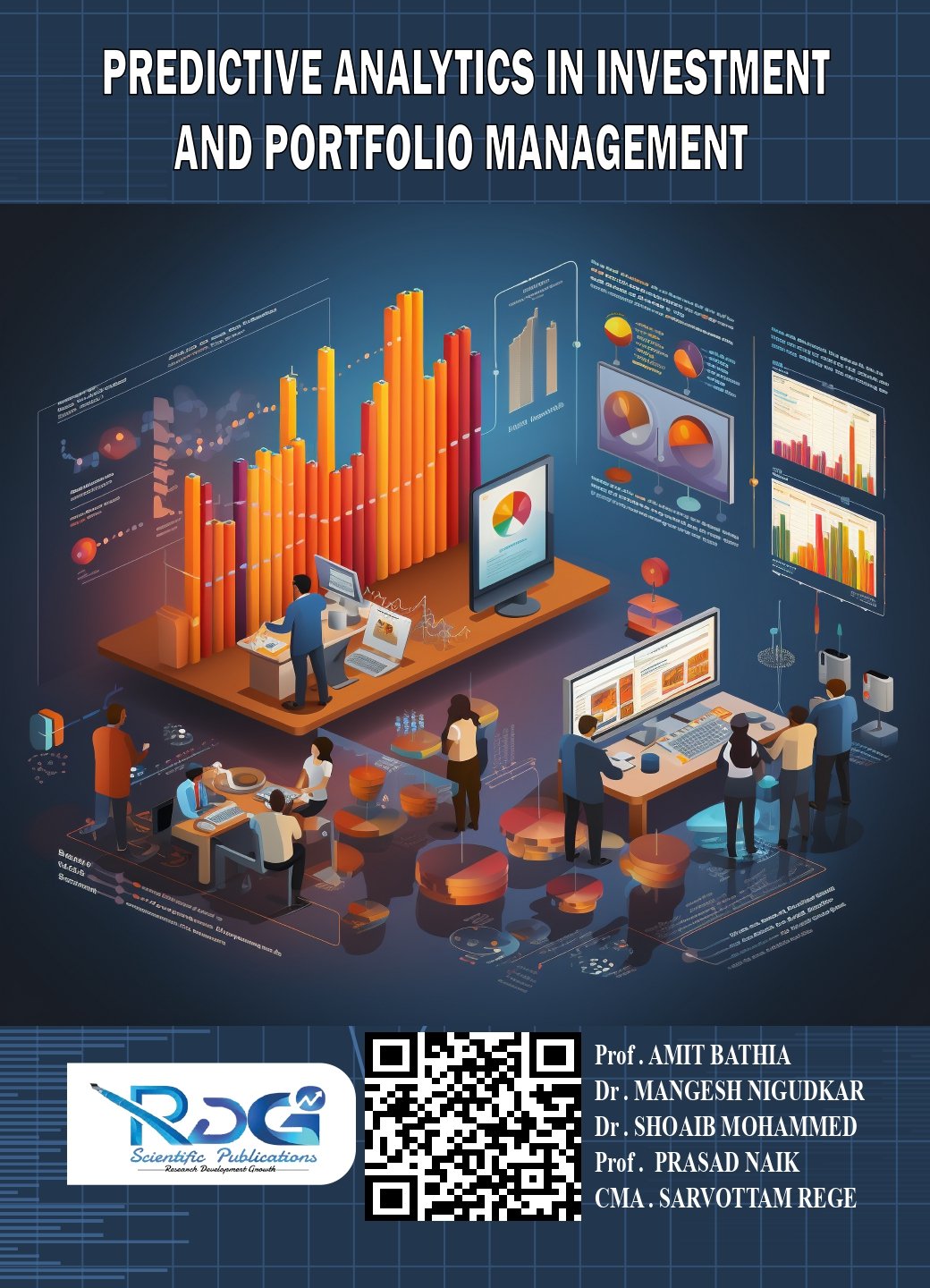




The world of finance has always been a delicate balance of risk,
opportunity, and foresight. From the early days of ticker tapes and
handwritten ledgers to today’s algorithmic trading and real-time global
markets, one constant has remained: the need to predict the future.
Investors, portfolio managers, and analysts alike strive to anticipate
market behavior, assess risks, and identify profitable opportunities
before they materialize. What has changed, however, is the sheer scale,
speed, and sophistication with which such predictions can be made.
In recent years, predictive analytics has emerged as a transformative
force in investment and portfolio management. By leveraging statistical
models, machine learning algorithms, and vast amounts of structured
and unstructured data, financial professionals are increasingly moving
beyond intuition-driven decisions toward data-driven insights. This
shift is not merely a technological advancement—it represents a
fundamental change in how financial markets are understood,
navigated, and influenced.
This book, Predictive Analytics in Investment and Portfolio
Management, is designed to serve as both a comprehensive guide and a
practical resource for academics, practitioners, and aspiring
professionals. It explores the foundations of predictive analytics, the
methodologies that drive predictive models, and their real-world
applications in investment decision-making and portfolio construction.
At the same time, it does not shy away from addressing the challenges—
ethical dilemmas, biases, regulatory issues, and risks—that accompany
these powerful tools.
Each chapter builds progressively, beginning with the conceptual
underpinnings of predictive analytics in finance, moving through data
4
handling and modeling techniques, and culminating in implementation,
governance, and future directions. Readers will find discussions not
only on traditional markets such as equities and fixed income, but also
on emerging frontiers like cryptocurrencies, ESG-driven investments,
and decentralized finance.
The purpose of this book is not to offer a “black box” set of trading rules
or definitive predictions about markets. Instead, it aims to provide the
reader with frameworks, methodologies, and perspectives that can be
adapted and extended to the evolving landscape of modern finance.
Whether you are a student entering the world of financial analytics, a
researcher exploring advanced methodologies, or a practitioner seeking
to enhance decision-making processes, this book intends to equip you
with both the technical depth and strategic insight to navigate an
increasingly data-driven financial ecosystem.
As finance and technology continue to converge, predictive analytics
will remain at the heart of innovation. By understanding its principles,
tools, and implications, we can move closer to building investment
systems that are not only smarter and more efficient but also more
transparent, ethical, and resilient.














Reviews
There are no reviews yet.